
The Rather Comfortable Discomfort

When the body registers threat and the mind knows it isn’t real, it produces a distinct kind of pleasure. Modern camping is essentially benign masochism with great advertising. The discomfort looks real enough (yet minimal) to feel like an achievement and managed so much to never challenge you in any way.
We officially kicked off the camping season. When my husband suggested last year that we try camping, I was really reluctant. All the supposed discomfort made the idea deeply unappealing to me. But as we gathered equipment, and got familiar with the campgrounds and the process of it all, we very much liked it. I didn’t see this at first, but in the discomfort there is actually quite a lot of comfort. The idea I had in my mind was of a, first of all, bodily liquids and solids going into the bucket, of unsafe bear-wandering-around wilderness, of lighting matches after the flashlight mysteriously goes out, of reaching a clearing in the woods by means of a compass, you understand. The old way. But modern world has become very good at delivering the feeling of an experience while removing the parts that made the experience what it was.
Camping feels like camping in the sense that there is fire in the firepit, the tent, the woods, the nominal removal from ordinary life, but the actual physical and cognitive demands of camping have been systematically reduced until what remains is the very minimal discomfort.
No, not even that. More like inconvenience. You get the aesthetic and the story, the Instagramable moments and the sense of having done something different and difficult.
Sure, we could do it the old, proper way, but would we? I don’t think we could pull it off, no.
The market responded to what people say they want, the experience, the feeling, the memory, while also responding to what people really want, which is to not be too uncomfortable. The outdoor industry threads that needle in the most sophisticated ways.
It's not just comfort, when I think about it. It's also the feeling that the relationship with nature is managed for us. Take, for example, the wooden boardwalks through the forest we encounter on some sites. Keep the nature in sight, at a slight distance even while appearing to provide access to it. You are in the forest but your feet don't touch the ground. You don’t muddy up your shoes, you don’t trip over the roots, you don’t feel the terrain working your muscles. All the things that make a walk in the woods a different physical and cognitive experience from walking on a pavement-removed. So you can have the scenery. Nature as backdrop.
Paul Rozin writes about what is called benign masochism, which is the human taste for experiences that are uncomfortable in a controlled way, where the discomfort is real enough to feel significant but contained enough to be safe. Experiencing things like spicy food, horror films, roller coasters are where the body registers threat and the mind knows it isn't real, so it produces a particular kind of pleasure. Modern camping is essentially benign masochism with great advertising. The discomfort looks real enough (yet minimal) to feel like an achievement and managed so much to never actually challenge you in any way.
The discomfort of going camping and spending time outdoors and finding your own way is crucial to the experience. It is supposed to help us reset, gain perspective, sense of capability, the feeling of having been somewhere else, give us some kind of a transformation. What's left of it is a very pleasant approximation of the experience, and most people can't tell the difference because they never really thought about the original. I don’t see our camping trips as such an adventure anymore, more like a really inconvenient commercial vacation. That said, we still find our own ways to feel more nature and enjoy it.
The wider pattern I can see from this is that he modernity has become very good at delivering the surface of experiences without its core. The comfortable discomfort that camping represents is a much larger and more pervasive orientation toward experience where the point is to have done it, not to have been changed by it.
What follows are some anecdotes from the recent camping trip.
The slingshot
When I was kid, I used to search for Y-shaped sticks and tie an elastic band to make a slingshot. My son was given a prober, store-bought one. Very springy. The rule was immediately set: he was to use it on the lake shore only, shooting pebbles into the lake. I had to have a try. Man, did it feel great to actually send that pebble hurling across the water, farther than I could ever shoot anything out of my homemade one!
The uninvited
A very brazen raccoon had been lurking around our camping spot and made various attempts at getting the chicken from the fire. Finally, my husband chased it away onto a tree, and my kid got the idea that the slingshot could be put to its proper use, and tried to hit the racoon with a pebble from his sister’s collection. Needless to say, before anyone got the chance to stop him, the pebble ricocheted off the tree and nearly hit him on the head.
The lilacs
As we walked further away from the campsite, lilac bushes began appearaing everywhere. Every breeze carried that unmistakable sweet, nostalgic scent, it’s how the spring smelled in front of the house my mom lived in. After several minutes of admirable restraint, I pilfered some. I regret nothing.
The hole
We didn’t know it before we visited this particular campsite, and lo and behold, vault toilets. That’s non-flushing, hole in the ground type. Of course, there were flushing toilets and shower stations at about 1.5 km walking distance. As I still always hold my 4-year old daughter to hover above public toilets, that meant I had to go to the hole twice as much as anybody else. Just, yuck! But there you go, I found discomfort, and it wasn’t hard.
What kids did
As a rule, we don’t bring any digital entertainment on camping trips. Adults use phones for necessities, and kids have a digital camera for capturing memories.
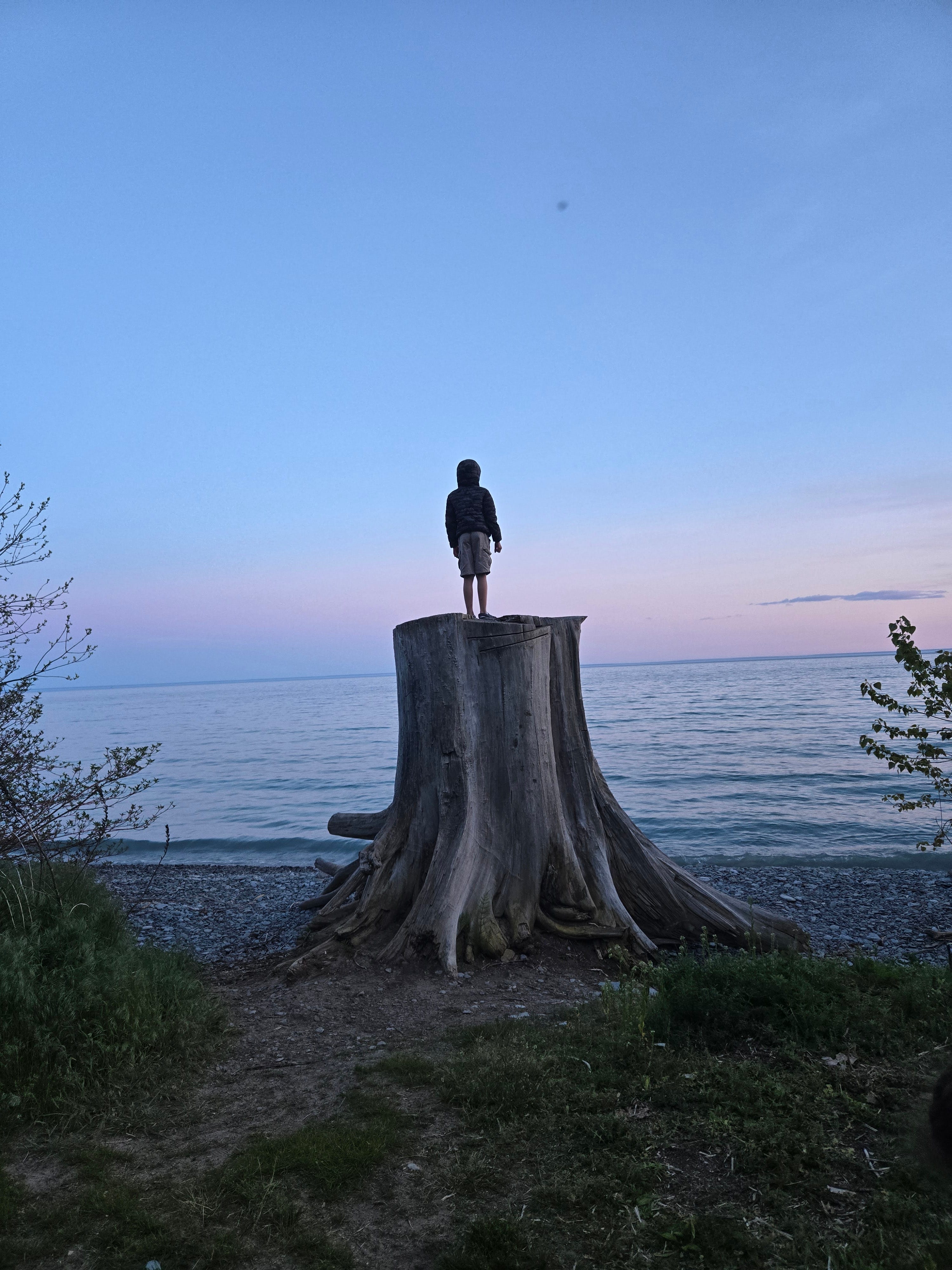
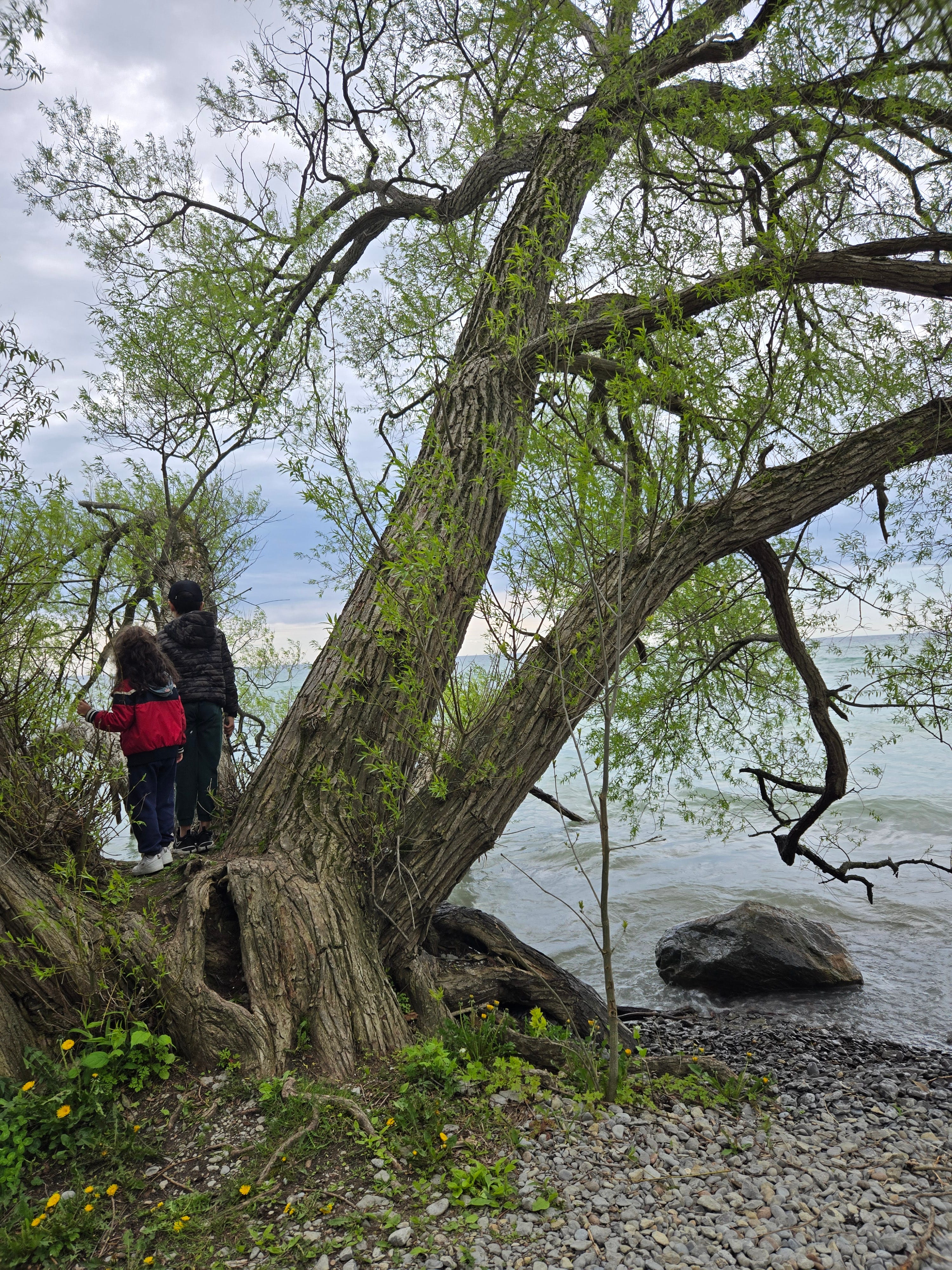
The kids spent a lot of time on the lake shore, wading in (it’s so freaking cold still), playing with pebbles, slingshot-ing, rock-skipping, searching for baby crabs… We walked the trails, watched the birds with binoculars and noted down ones we could identify (we had books to help us). There were plenty of fallen trees and trunks and stumps to climb and walk on. Dirt to dig with little metal shovels I use for gardening.
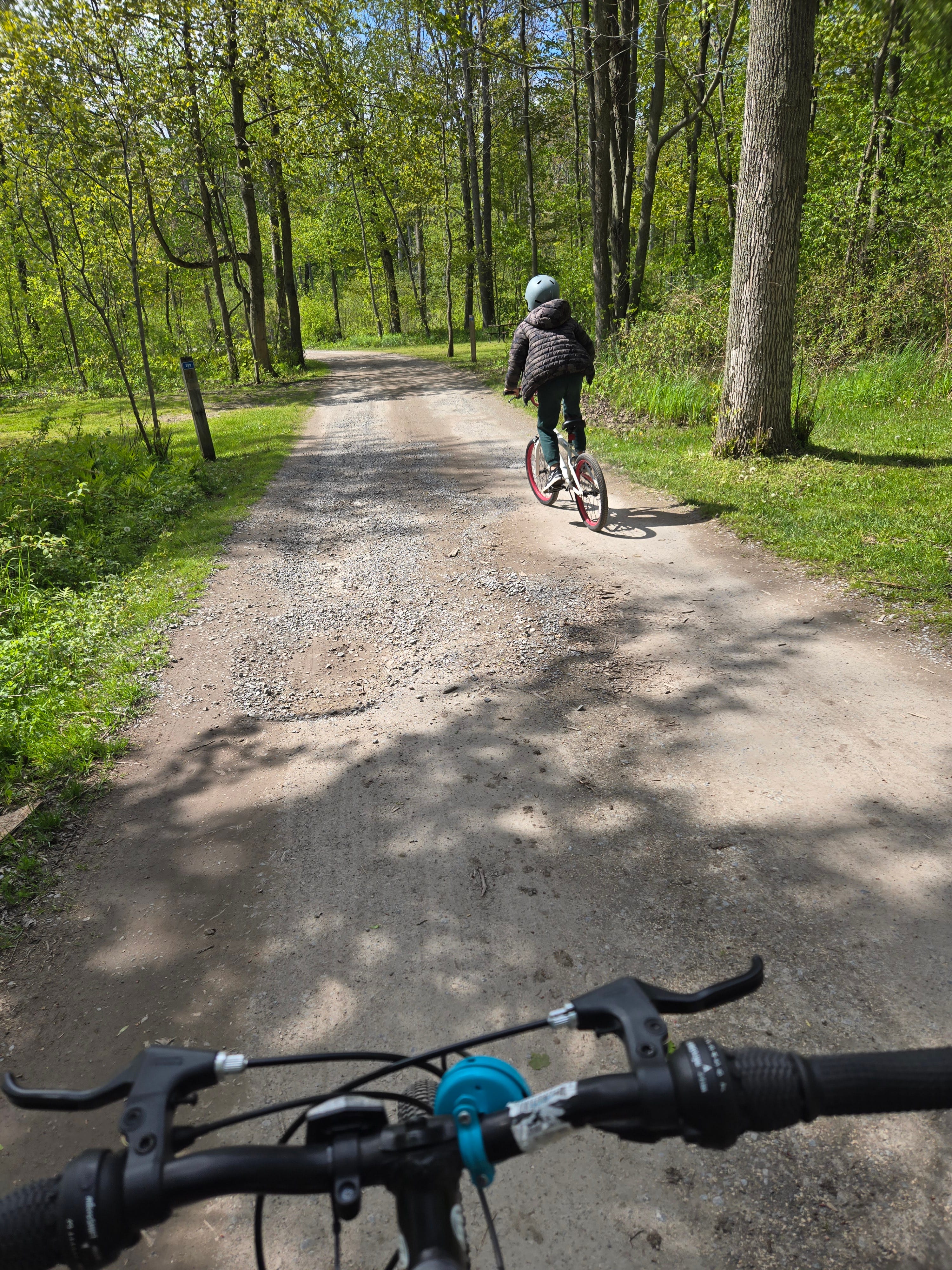
It was wonderful to grant my older kid the freedom to ride bike all around the campgrounds out of sight and unsupervised. I went around with him the first couple of times to make sure he could find his way back. But I have to say, my son’s most bountiful activity was just getting a stick and bashing the tall grass and low hanging branches.
What dog did
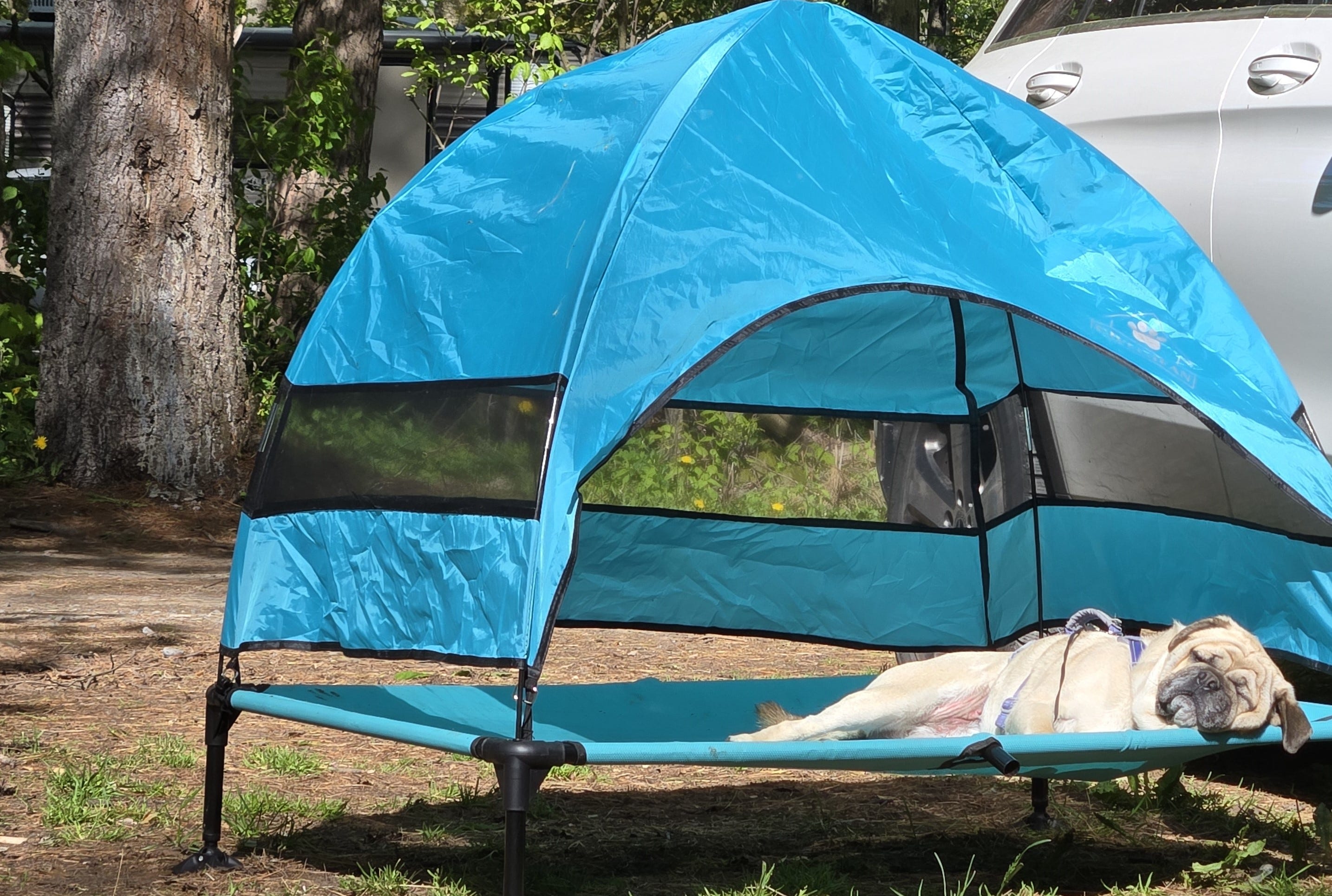
The pup got his well-deserved heap of bones from the barbecue for being so good and alerting us to the pesky raccoon approaching. He did his best to bark it off too. He slept in the tent with us, had the coziest night of his life. Other than that, he was mad for the smells of the forest and meting new friends to sniff.
In the posts I wrote last year, you can read about how and why I fell in love with camping and why I value it so much. It’s interesting to see how my thinking evolved. I still stand by all those things, it’s just that now I have developed enough of a relationship with it, I started seeing things more clearly. Still, we wouldn’t trade it, even though I am quite disillusioned to the way things work. We still find ways to get a fuller-than regular experience out of it, and are happy for it.


With love,
Aleksandra
I’m deeply grateful to everyone who reads, reflects, and supports these posts. Thank you for being here. If you find this post worthwhile, please like, share and subscribe. It truly helps Curious and Capable Kids reach more people. If you are able to support these posts financially, you can do so with a 60% off coupon.
You might also like:


Great reflections, as always! I need to go back and read your other posts about camping, but my first thought is that modern camping has created many more gradations of discomfort to choose from. Maybe that’s the same as stripping away the core discomfort and leaving only the surface, but I’m not sure of that.
My family camped often when I was growing up because it was a cheap vacation that got us outdoors, all things my immigrant dad liked. As we kids got a bit older, we started backpacking - once in the Grand Canyon, an arduous hike that requires you pack in your own water. When we were young adults, he organized our cousin cohort to go snow camping - but sent us into the snow with 3-season tents and sleeping bags. We still talk about THAT discomfort! Nothing like waking up throughout the night from the cold, and finally in the morning with one’s nose frozen to the tent fabric.
All of which is to say: I have some experience with “proper” camping discomfort, and it does make for moments of growth and memories to laugh about. But I think riding a bike around a car-and-RV campsite is a lovely thing too. As is sleeping in a tent nestled with the dog, in all the latest lightweight easy-to-assemble temperature- and comfort-regulating gear. For truer immersion into nature, there are always hike-in campsites with minimal facilities (usually less in demand, surprise surprise), camp-anywhere wilderness areas with no facilities at all, and so on. Some families are even thru-hiking iconic trails like the Pacific Crest or Appalachian, together with their kids, which boggles my mind. The gift of discomfort is absolutely still available.